Technical guide
E61 group: wear parts, symptoms and routine maintenance
On an E61 group the wear parts are the group gasket and shower screen, the lever cam seals, the seals and springs of the internal valves, and the gicleur and mesh filter, which clog with limescale. Routine upkeep comes down to regular backflushing, a little food-safe grease on the cam and new seals when leaks appear.
How does an E61 group work?
It is a lever group in which a cam operates internal valves: with the lever up, the water inlet opens and the pump starts; with the lever down, the inlet closes and the bleed valve opens, releasing the pressure into the drip tray.
Launched by Faema in 1961, the group is a brass casting of more than 4 kg, kept hot by a thermosiphon that circulates water from the boiler or heat exchanger. Water enters through a gicleur and also fills a pre-infusion chamber, so the coffee is wetted at low pressure before it receives pump pressure, around 9 bar. Today the design is built by many makers, with differences of detail in the internal parts.
Which parts of an E61 group wear out?
Mainly the seals: first the group gasket, then the lever shaft seals and the valve seals; after them come the springs, the shower screen and, with hard water, the gicleur and the mesh filter.
| Part | Function | Symptom of wear |
|---|---|---|
| Group gasket (73 × 57 mm; 8 to 9 mm) | Seals the portafilter | Leak at the rim; the handle turns further than before |
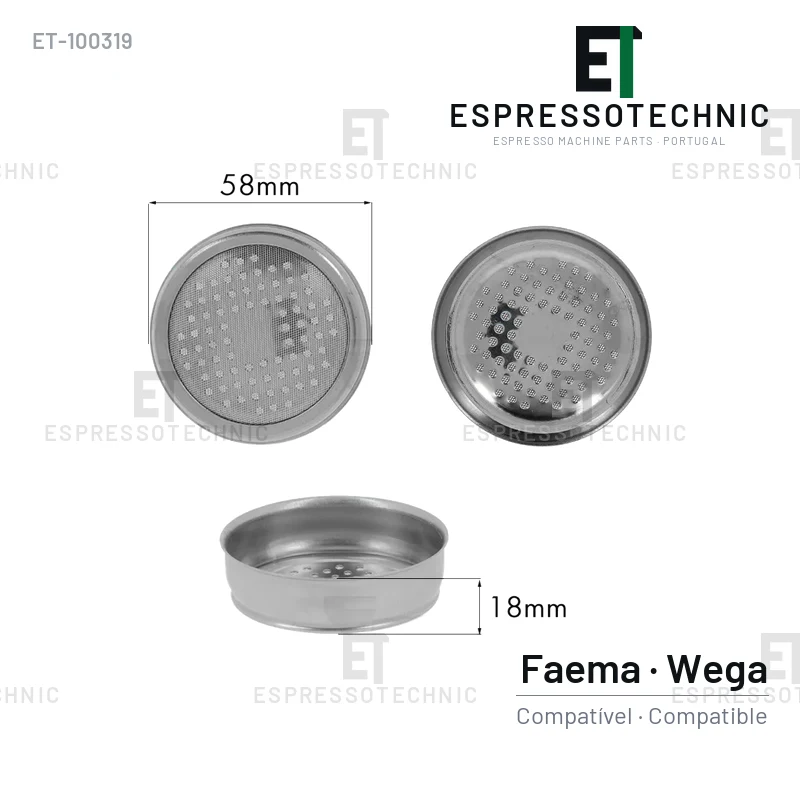
| Shower screen (push fit, held by the gasket) | Spreads water over the coffee | Blocked holes, irregular water pattern |
| Shaft seals and sealing nut | Seal the point where the lever enters the group | Water escaping at the lever |
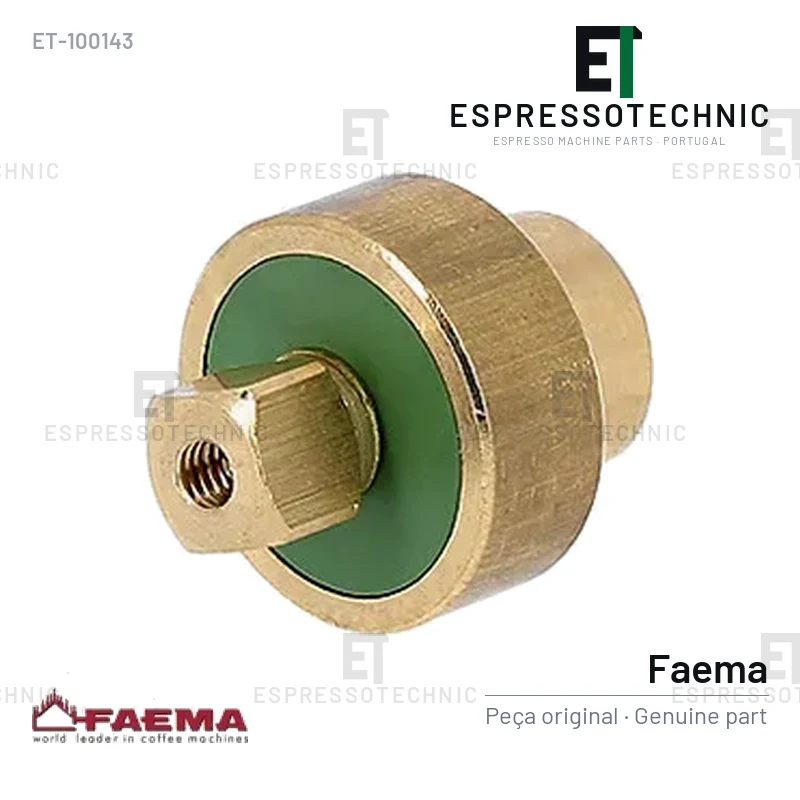
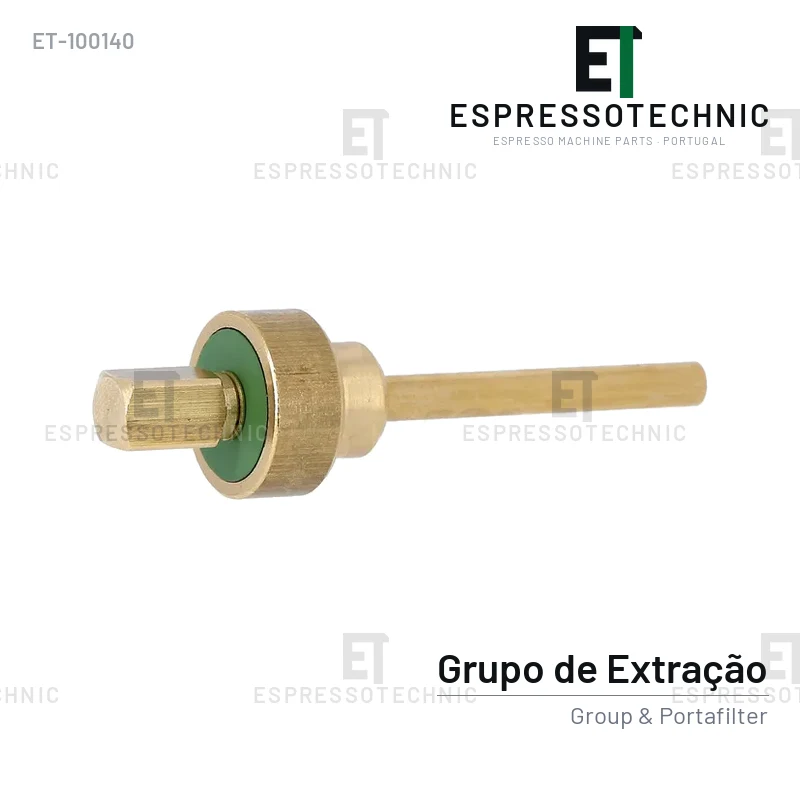
| Upper valve seal and spring | Close the water inlet | The group drips with the lever down |
| Bleed valve seal and spring | Hold the pressure during extraction | Water running into the drip tray during extraction |
| Gicleur and mesh filter | Meter and filter the incoming water | Weak or irregular flow (limescale) |
| Cam and lever pin holder | Operate the valves | Stiff, squeaking or loose lever |
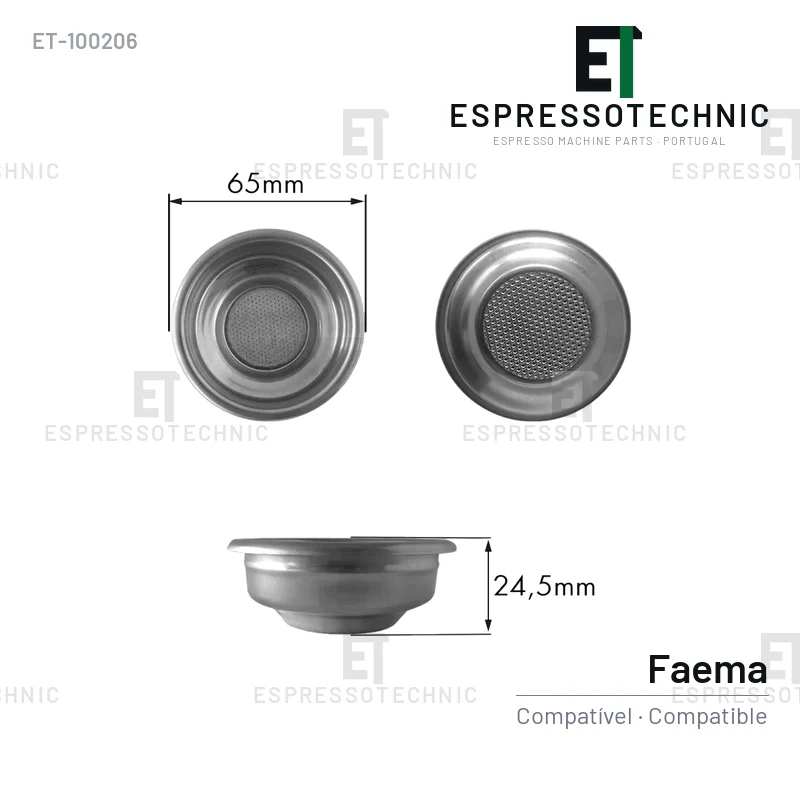
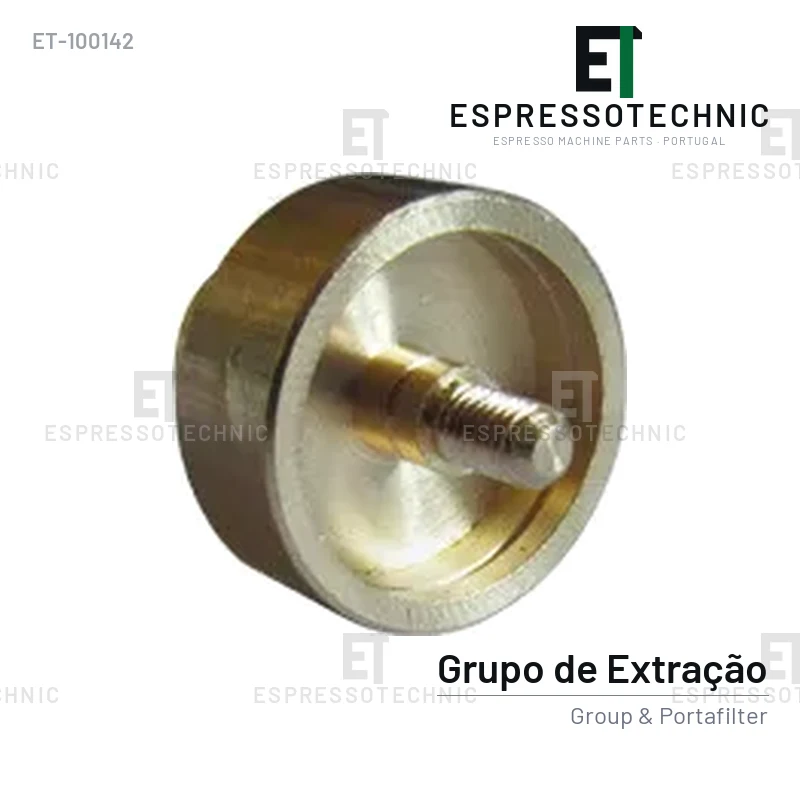
These parts are in Group & Portafilter and in Gaskets & O-rings.
How often should an E61 group be cleaned?
On commercial machines the manuals ask for a detergent backflush every day: the Faema E61 Legend manual places it at the end of the working day. On low-volume E61 machines the interval is given in cups: ECM gives about 90 to 140.
The ECM procedure uses the blind basket with 3 to 5 g of detergent: the lever is raised to fill, moved to the half-way position (about 45°) for some 20 seconds and lowered to discharge, repeating until the water runs clear; then the group is rinsed. The same manual warns that cleaning with detergent too often degreases the moving parts, so it is worth alternating with water-only backflushes. Blind baskets and shower screens are in Baskets & Shower Screens.
Where and with what is an E61 group lubricated?
With a thin film of silicone grease approved for food contact, applied to the cam, the lever shaft and the valve pins that the cam pushes.
The sign of missing lubrication is a stiff or squeaking lever, often after several detergent cleans. To reach the cam, the lever assembly is removed by undoing the nut on the side of the group; as the group is connected to the boiler circuit, the job is done with the machine off, cold and depressurised. If the shaft seals have gone hard, this is the time to change them.
When are the gasket, the shower screen and the internal seals replaced?
The group gasket and the shower screen are changed together, as soon as the portafilter leaks or the rubber hardens; the internal seals are changed when their symptom appears or at a planned overhaul.
- Gasket and screen: the usual size is 73 × 57 × 8 or 8.5 mm, with 9 mm versions for worn groups. According to the ECM manual the two come out together with a flat tool, with the machine cold and isolated from the mains, and the new gasket goes in with its rounded side up.
- Internal seals: one service guide for home machines puts the first overhaul at two to three years; on a machine in commercial service the same wear arrives much sooner.
- Limescale: a blocked gicleur or mesh filter calls for descaling, which ECM reserves for a qualified technician.
FAQ
- Are all E61 groups the same?
- No. The layout is common, but each maker has changed details. In the catalogue, the bleed valve for Faema groups is 19.8 mm long and the version for Vibiemme and BFC is 27.6 mm. When ordering internal parts, state the make and model of the machine.
- What gicleur size does an E61 group take?
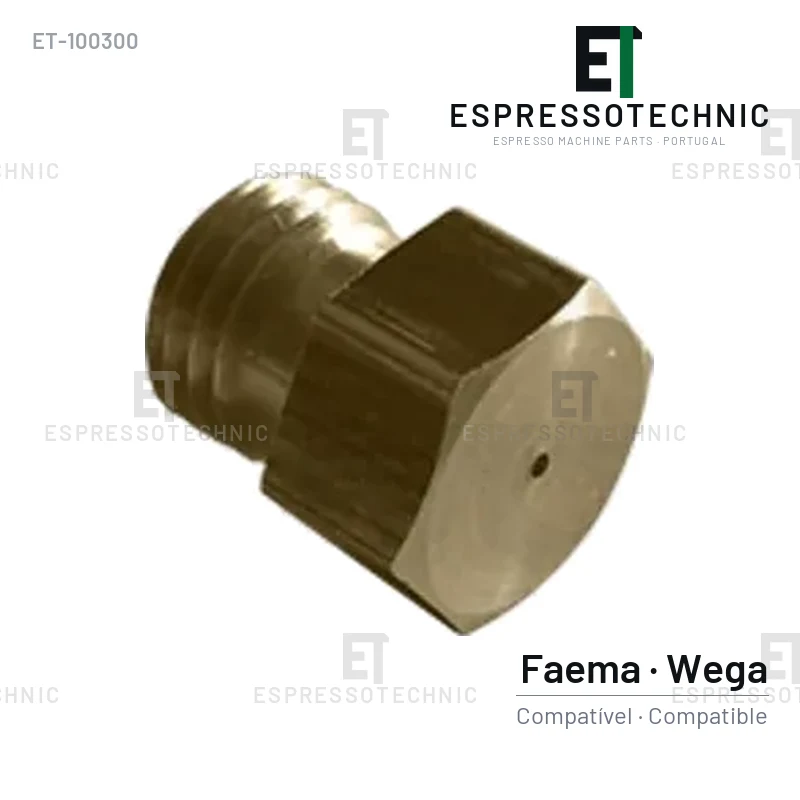
- It depends on the maker. The catalogue includes 0.6 and 0.8 mm gicleurs for E61 groups; a smaller orifice fills the group more slowly and softens pre-infusion. Replace like for like unless you really intend to change the flow.
- Why does the lever squeak after cleaning?
- Because the detergent has stripped the grease from the cam, exactly what the ECM manual warns about. Lubricate the cam and the pins and, within what the machine's manual allows, alternate with water-only backflushes.
- Does backflushing remove limescale from the group?
- No. Backflush detergent dissolves coffee oils, not limescale. Deposits in the gicleur, the mesh filter or the thermosiphon circuit need a descaling carried out by a technician.
Related part families
Prices and availability on request. We reply in English or Portuguese.