Technical guide
Boiler pressostat: what it is, how to adjust it and how it fails
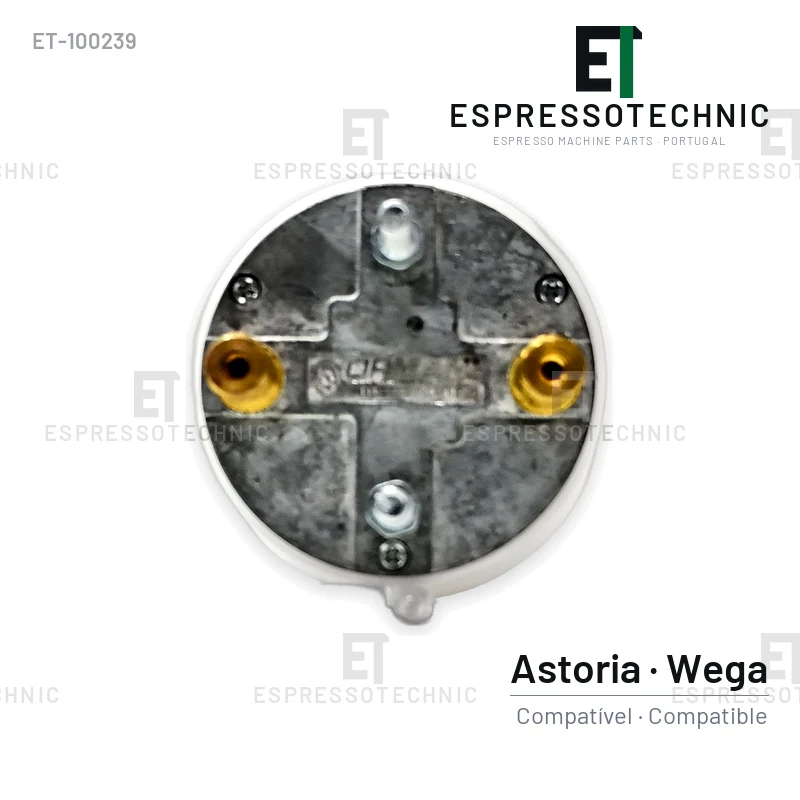
The pressostat is the switch that turns the heating element on and off according to steam pressure in the boiler, holding it within a narrow band: on many professional machines, between about 1 and 1.4 bar, depending on the model. It is adjusted with the screw on the component, in small steps, and its contacts wear with use.
What is a pressostat and how does it work?
A pressostat is a pressure-operated switch: a diaphragm receives boiler steam pressure through a tube and, once it overcomes the force of a spring, opens the contacts that feed the heating element. When the pressure has dropped by the differential, the contacts close and the element heats again.
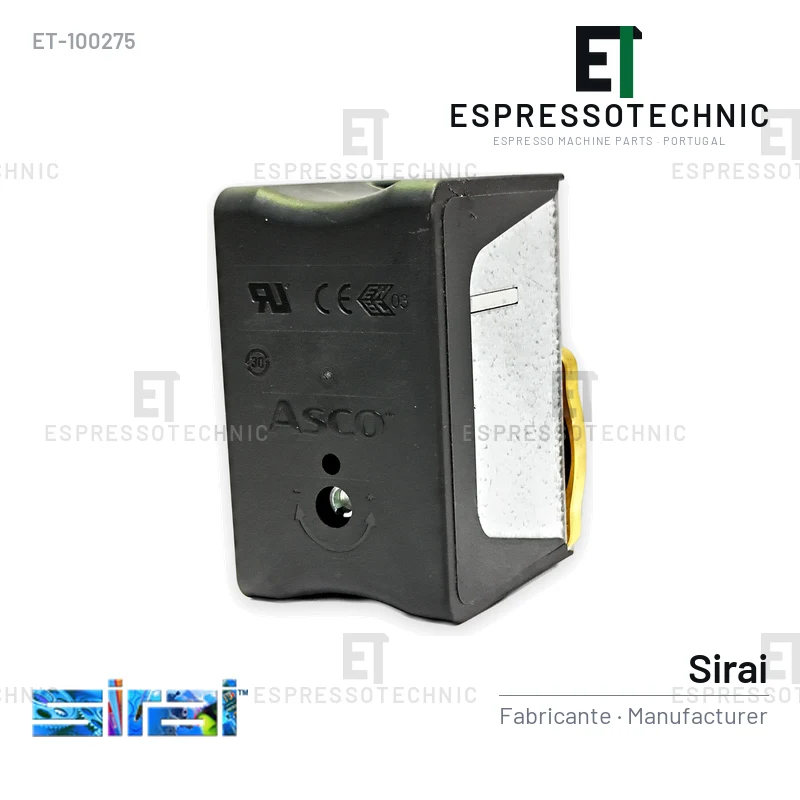
A widely used example on professional machines is the Sirai P302/6: three poles, adjustable from 0.5 to 1.4 bar, fixed differential of about 0.15 bar, 30 A contacts and a G 1/4″ connection. Because the steam in the boiler is saturated, setting the pressure sets the temperature:
| Gauge pressure | Approximate steam temperature |
|---|---|
| 0.8 bar | 117 °C |
| 1.0 bar | 120 °C |
| 1.2 bar | 123 °C |
| 1.4 bar | 126 °C |
Approximate values from saturated steam tables, at sea level.
What pressure should the boiler run at?
It depends on the machine: the manuals consulted place working pressure between 0.8 and 1.5 bar, and the right value is the one in the manual for the model.
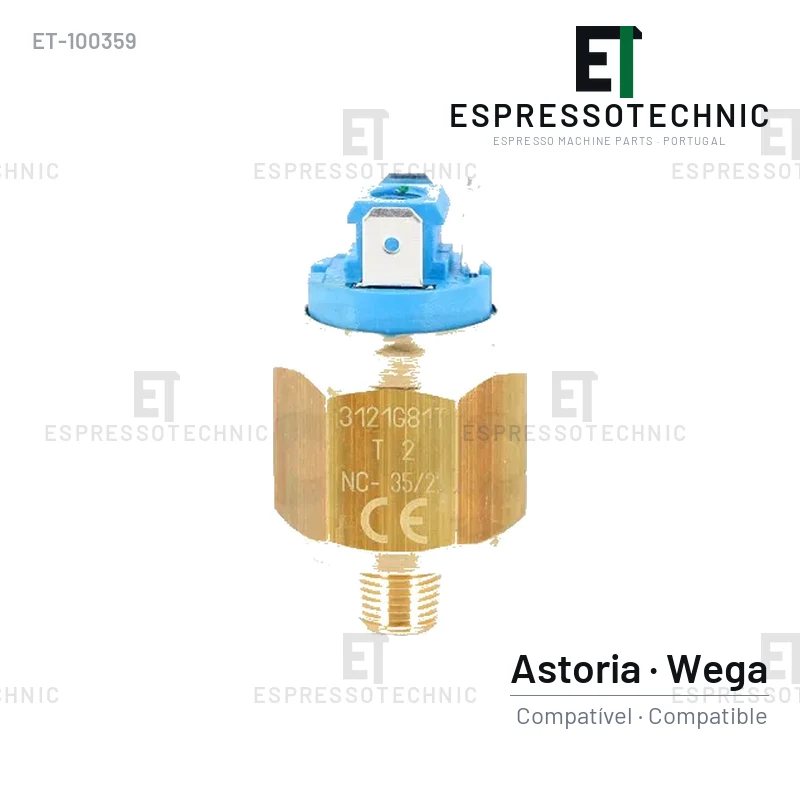
- Astoria and Wega (C.M.A.): 0.8 to 1.4 bar maximum.
- Nuova Simonelli Appia II: 1 to 1.4 bar advised.
- La Marzocco Linea Classic: 1.2 to 1.5 bar in the steam boiler, which is separate from the coffee boiler.
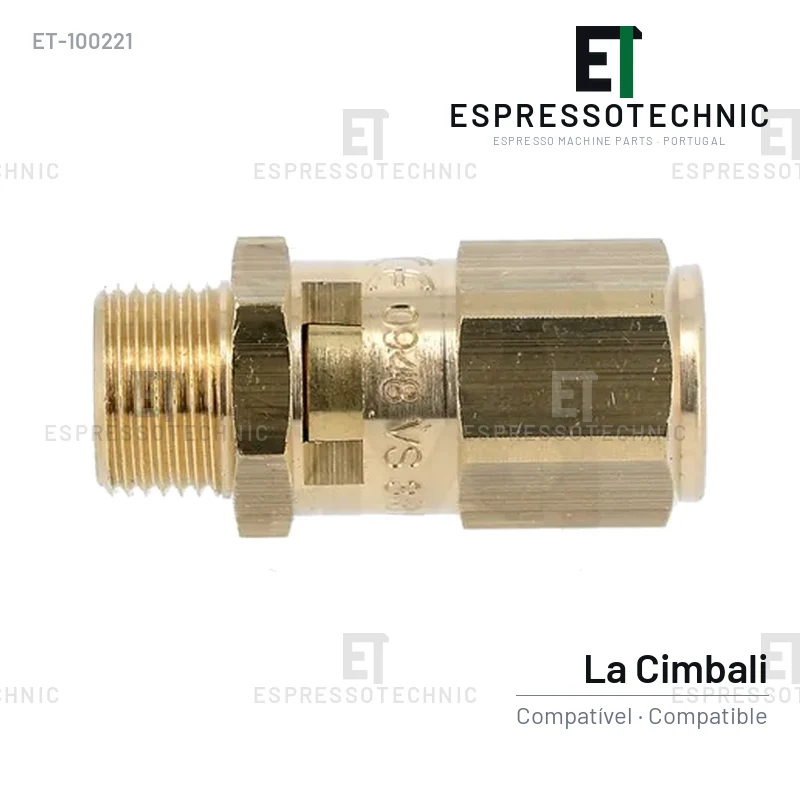
On heat-exchanger machines the coffee water is heated inside the steam boiler, so raising the pressure also raises coffee temperature. The C.M.A. manual gives lowering the pressure at the pressostat as the remedy for coffee that is too hot. Never set it close to the safety valve value, which is fixed and depends on the model (2 bar on C.M.A. machines).
How is a pressostat adjusted safely?
It is adjusted with the screw on the pressostat body, in small steps, following the “+” and “−” marking on the part or the manual, because the direction that raises the pressure is not the same on every model. The terminals carry mains voltage; the safe method is to adjust with the machine switched off and check afterwards:
- With the machine in service, note on the boiler gauge the pressures at which the element cuts out and cuts back in.
- Disconnect the machine from the mains before removing panels.
- Turn the screw a fraction of a turn in the required direction, without touching the terminals.
- Refit the panels, switch the machine on and watch two or three cycles on the gauge.
- Repeat until the pressure is within the range in the manual.
Some manuals allow adjustment with the machine running; that procedure is strictly for qualified technicians using insulated tools.
Which pressostat faults are most common?
The typical fault is oxidised or burnt contacts: the element stops receiving current and the machine has no steam or the coffee is cold. The C.M.A. manual lists this cause for both symptoms and says to clean the contacts or replace the pressostat. Other possible faults:
- Welded contacts: the element does not cut out and the pressure rises until the safety valve opens. Switch the machine off and replace the pressostat.
- Calibration drift: coffee too hot or poor steam, with the pressostat still working.
- Connecting tube blocked by limescale: slow response and wide swings on the gauge; if fully blocked, the element may not cut out.
- Leaking diaphragm: water or steam at the pressostat body.
C.M.A. and La Marzocco both include a pressostat check in annual maintenance.
How do I choose a replacement pressostat?
Choose by number of poles, contact current rating, pressure range and thread. With no contactor, the current the pressostat has to break is that of the heating element: 3000 W at 230 V is about 13 A.
- Poles: single-phase, or three-pole like the Sirai P302/6 where it breaks all three phases.
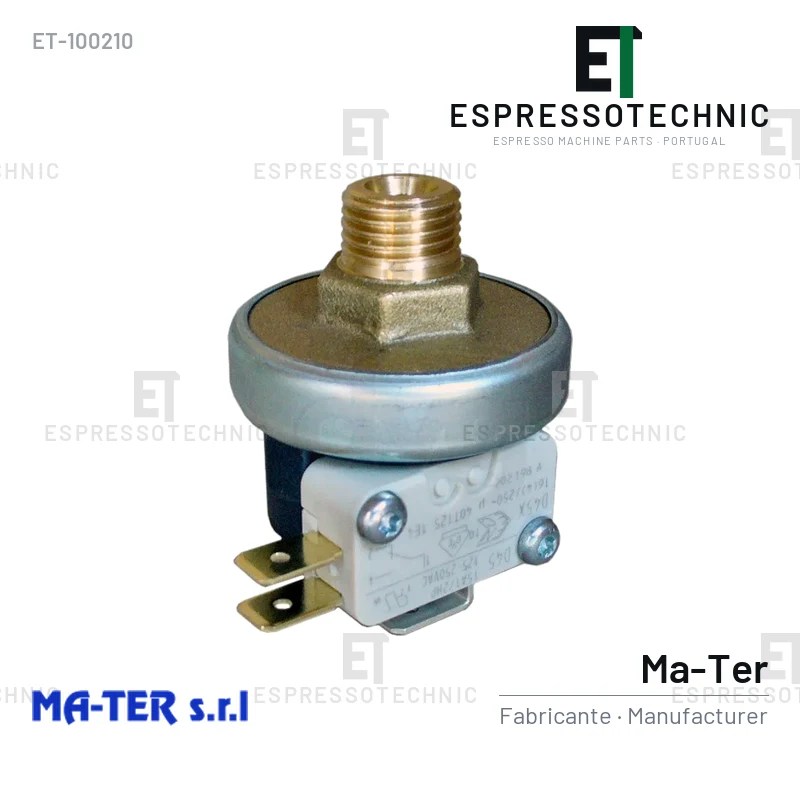
- Contact rating: for example, 16 A at 250 V on a Ma-Ter XP110 and 30 A on a Sirai P302/6. Never lower than that of the pressostat fitted.
- Pressure range: for example, 0.5 to 1.5 bar; some models have a fixed calibration.
- Thread: G 1/4″ or 1/8″, depending on the model.
Pressostats and gauges are listed under Sensors & Instruments; heating elements under Boilers & Heating; safety valves under Valves & Pumps.
FAQ
- Do all machines have a mechanical pressostat?
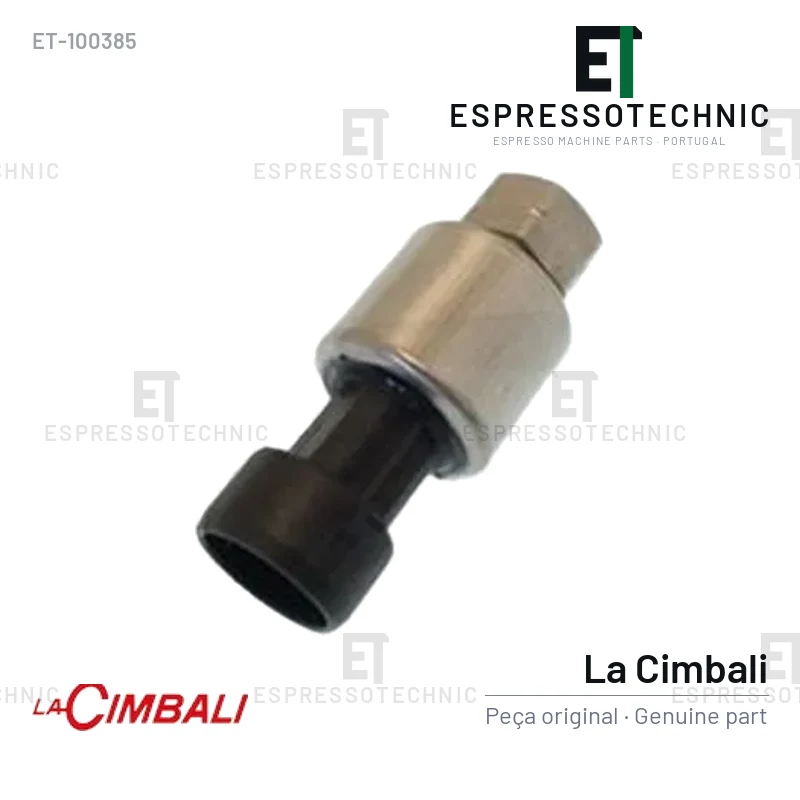
- No. Many electronic machines control the boiler with a temperature probe or a pressure sensor connected to the control unit, and the value is changed in the programming menu. On the Astoria Plus 4 You, for example, it is preset to 1.2 bar.
- Why does boiler pressure swing on the gauge?
- A small swing is normal: the pressostat switches the element off at one pressure and back on slightly below it. On the Sirai P302/6 this differential is fixed at about 0.15 bar. Much wider swings are a reason to check the pressostat and its connecting tube.
- Can I clean the contacts instead of replacing the pressostat?
- The C.M.A. manual recommends cleaning the contacts periodically with anti-oxidant spray; always do it with the machine cold and disconnected from the mains. If the contacts are burnt or welded, the part is replaced.
- Does the pressostat replace the safety valve?
- No. The pressostat is an operating control; over-pressure is handled by the safety valve and overheating of the element by the safety thermostat. None of them should be bypassed.
Related part families
Prices and availability on request. We reply in English or Portuguese.