Technical guide
Anti-vacuum valve and safety valve: what they do, signs of failure and replacement
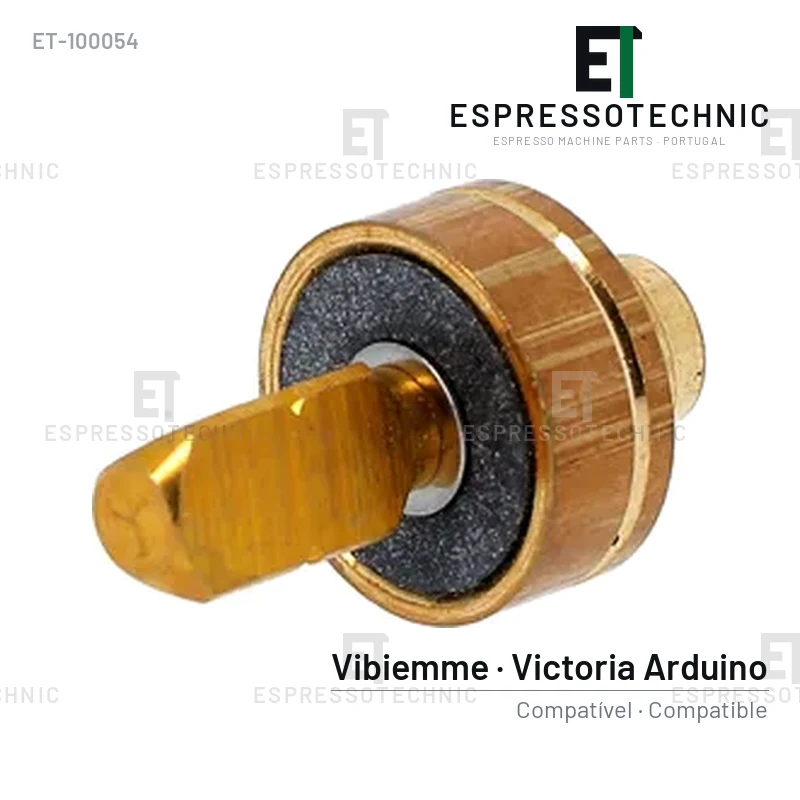
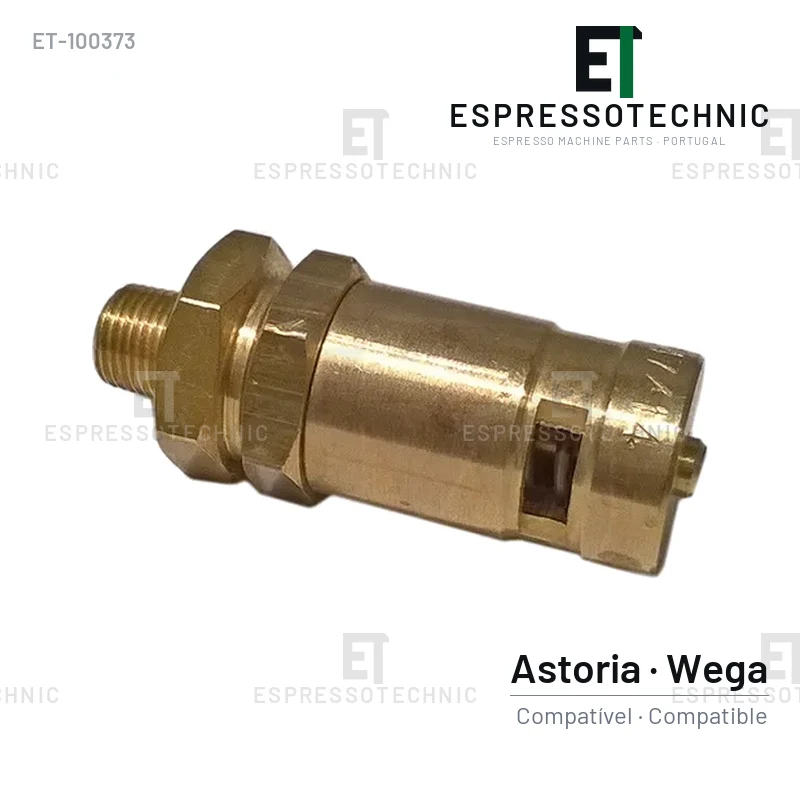
The anti-vacuum valve lets air out of the boiler while it heats up and back in as it cools, so that a vacuum cannot pull milk up the steam wand. The safety valve opens by itself and releases steam if pressure exceeds its set value, on many machines between 1.5 and 2 bar. If either one fails, it is replaced.
What does the boiler anti-vacuum valve do?
It keeps the boiler open to the atmosphere while it is cold and seals it once there is steam. It is a small valve fitted on top of the boiler, with a pin that moves freely.
- During heat-up the pin sits down and air escapes. When the water boils, steam pushes the pin against its seat and the valve closes.
- During cool-down the steam condenses and pressure falls below atmospheric. The pin drops and lets air in; without that, the vacuum would draw liquids up the steam wand into the boiler.
Manuals also call it an anti-suction valve, negative pressure valve or vacuum breaker, and some safety valves have a built-in anti-vacuum function.
How do I know if the anti-vacuum valve has failed?
There are two possible failures: the valve does not close, or it sticks shut, nearly always because of limescale.
- Not closing: steam or water escapes continuously from the top of the boiler, you hear a hiss and pressure is slow to build.
- Stuck shut: air cannot escape during heat-up. The gauge rises, but part of that pressure is air rather than steam, so the boiler is cooler than the reading suggests. As it cools a vacuum forms and milk can be drawn up the steam wand.
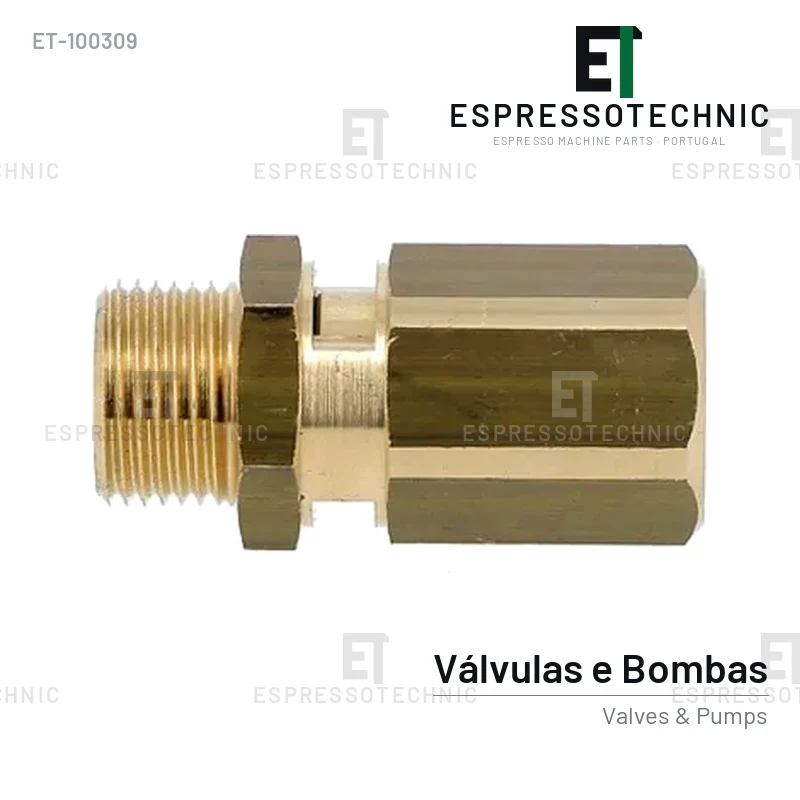
The check described in technical manuals is simple, but it is done with the machine switched off, cold and without pressure: the pin must move freely. If it is stuck, the valve is scaled up and is replaced. Then, with the machine switched back on, confirm, without touching the valve, that it closes as pressure starts to rise. These parts are listed under Valves & Pumps.
What does the safety valve do, and at what pressure does it open?
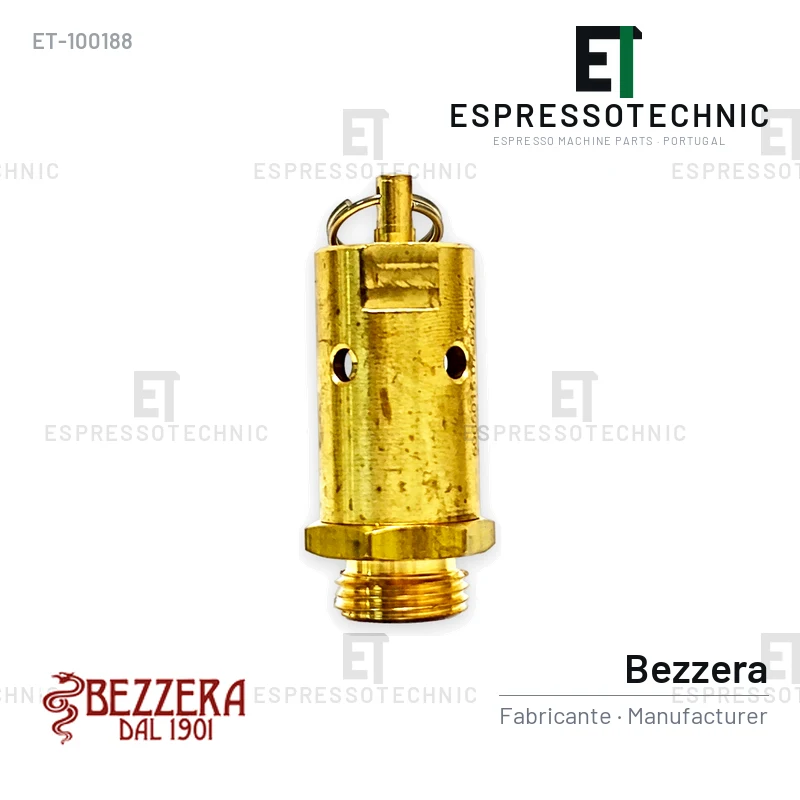
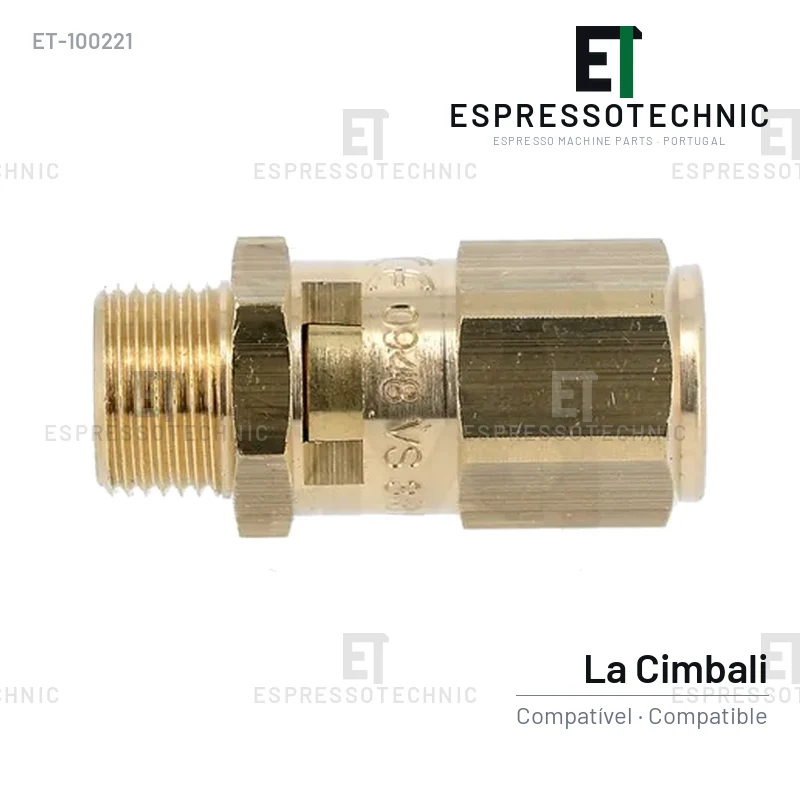
It is the last mechanical protection of the boiler. A calibrated spring holds it shut; if pressure control fails and pressure exceeds the set value, the valve opens and discharges steam until pressure drops. It works without electricity and independently of the machine electronics.
The opening pressure varies from machine to machine; the values below are documented examples, not a universal rule:
| Parameter | Reference values | Note |
|---|---|---|
| Steam boiler working pressure | 0.8–1.4 bar (C.M.A. technical manual); 1.2–1.5 bar (La Marzocco Linea Classic) | Controlled by the pressure switch or the electronic control |
| Safety valve opening pressure | 2 bar in the C.M.A. and Astoria manuals consulted; the catalogue lists valves set at 1.5, 1.65, 1.8 and 2 bar | The value stamped on the old valve or stated in the machine manual applies |
| Common threads | 1/8″, 1/4″, 3/8″ and 1/2″ | Check on the old part |
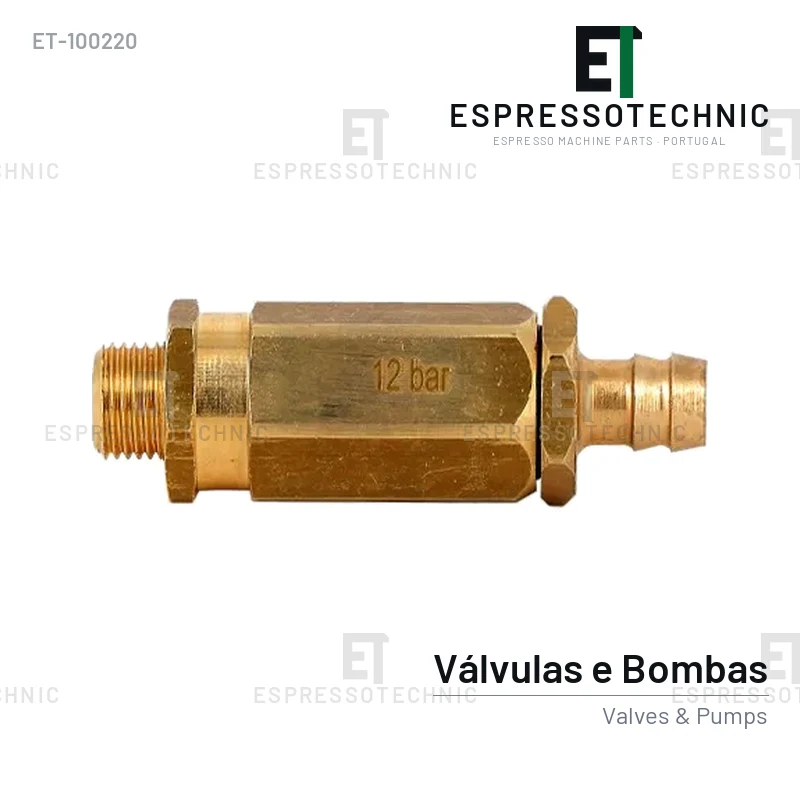
| Expansion valve on the coffee circuit | About 12 bar | A different part: it releases water, not steam |
In the European Union, safety valves are safety accessories under Directive 2014/68/EU (pressure equipment). The directive requires pressure-limiting devices to prevent pressure from permanently exceeding the maximum allowable pressure; it only allows a momentary surge, limited to 10% of that value.
Can I fit a safety valve with a different pressure, or plug one that drips?
No. The replacement must be the valve specified for that machine model, with the same opening pressure, the same thread, a discharge capacity suited to the boiler and CE marking; a safety valve is never plugged, blocked, adjusted or swapped for one with a higher pressure. It comes factory-set and sealed.
If the valve opens or drips, there are two explanations. Either the valve itself no longer seals, because of limescale on the seat or an aged seal, and it is replaced. Or the boiler pressure really is too high, because the pressure switch, the contactor or the heating control has failed. In that case switch the machine off and call a technician: the valve is doing its job and the fault lies in another component, for example under Sensors & Instruments or Boilers & Heating.
How often should they be checked, and when are they replaced?
At least once a year, by a technician, and more often if the manufacturer asks for it. C.M.A. technical manuals require a yearly check of the anti-vacuum valve, the safety valve and the non-return valve, with replacement if they malfunction. La Marzocco, in the Linea Classic manual, asks for the vacuum breaker to be checked every three months and inspected yearly.
Some manufacturers also prescribe preventive replacement of valves at fixed intervals, even without a fault, and rules for periodic inspection of pressure equipment differ from country to country: follow the machine manual and local regulations.
FAQ
- Is it normal for steam to come out of the top of the machine when I switch it on?
- Yes, for a few seconds during heat-up: it is the anti-vacuum valve pushing air out before it closes. If steam keeps escaping once the machine has reached working pressure, the valve should be replaced.
- Are the safety valve and the expansion valve the same part?
- No. The safety valve protects the steam boiler and opens at roughly 1.5 to 2 bar, depending on the model. The expansion valve sits on the coffee water circuit and limits the pressure created by the expanding water to about 12 bar, releasing a few drops to the drain.
- How do I find the safety valve pressure for my machine?
- From the value stamped on the body of the old valve and from the technical data in the machine manual. If the two do not match or the marking is unreadable, send us the brand, model and serial number before choosing the part.
Related part families
Prices and availability on request. We reply in English or Portuguese.